Kitchen Faucets: Types, Features, Benefits, and How to Choose the Right One
Kitchen faucets are among the most frequently used fixtures in any home. From washing vegetables and cleaning dishes to filling cooking pots and maintaining kitchen hygiene, a reliable faucet makes everyday kitchen activities easier and more convenient. Although kitchen faucets may appear to be simple plumbing fixtures, choosing the right one can significantly improve your kitchen’s functionality, appearance, and overall efficiency.
Today, kitchen faucets are available in a wide variety of designs, materials, finishes, and operating mechanisms. Homeowners can choose from traditional faucets, modern pull-down models, touchless designs, commercial-style fixtures, and many other options. Each type offers different features depending on household requirements, kitchen layouts, and personal preferences.
Whether you are renovating your kitchen, replacing an old fixture, or designing a new home, understanding the available options can help you make a better purchasing decision.
In this comprehensive guide, we will explore different types of kitchen faucets, their important features, popular materials, installation considerations, maintenance tips, and everything you should know before selecting the right faucet for your kitchen.
What Are Kitchen Faucets?
Kitchen faucets are plumbing fixtures designed to control the flow and temperature of water through a kitchen sink. They connect to the household water supply and allow users to access water for cooking, washing, cleaning, and other daily activities.
Modern kitchen faucets are designed to offer more than basic water control. Many models include advanced features such as pull-down spray heads, adjustable water pressure, temperature controls, touchless activation, and water-saving mechanisms.
The right kitchen faucet should combine functionality, durability, ease of use, and attractive design. It should also match the size and configuration of your kitchen sink.
Because kitchen faucets are used multiple times throughout the day, selecting a dependable product is important for long-term convenience.
Different Types of Kitchen Faucets
Understanding the different types of kitchen faucets is the first step toward choosing a suitable option. Each design offers specific advantages and works better for particular kitchen requirements.
1. Pull-Down Kitchen Faucets
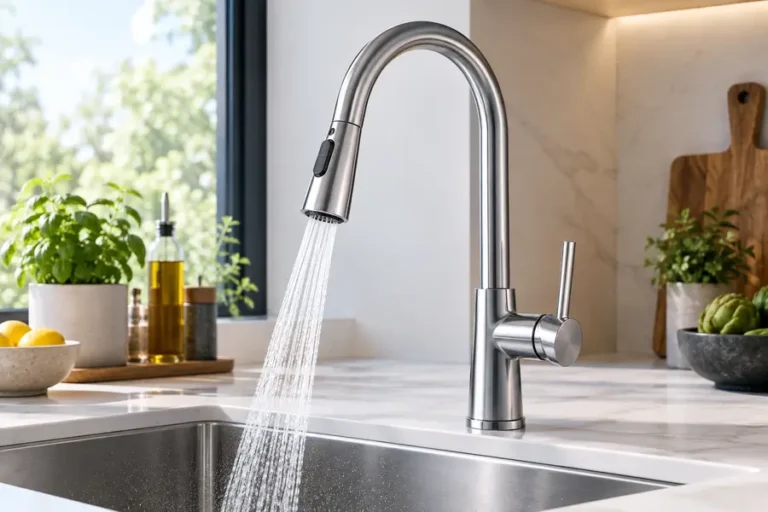
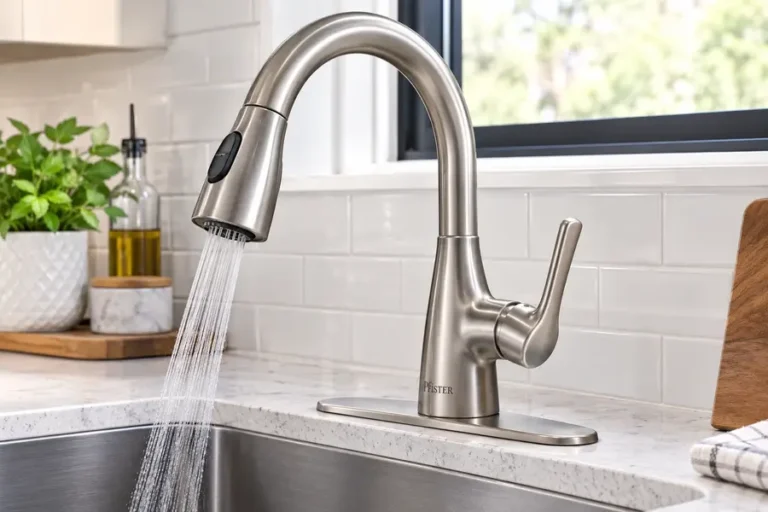
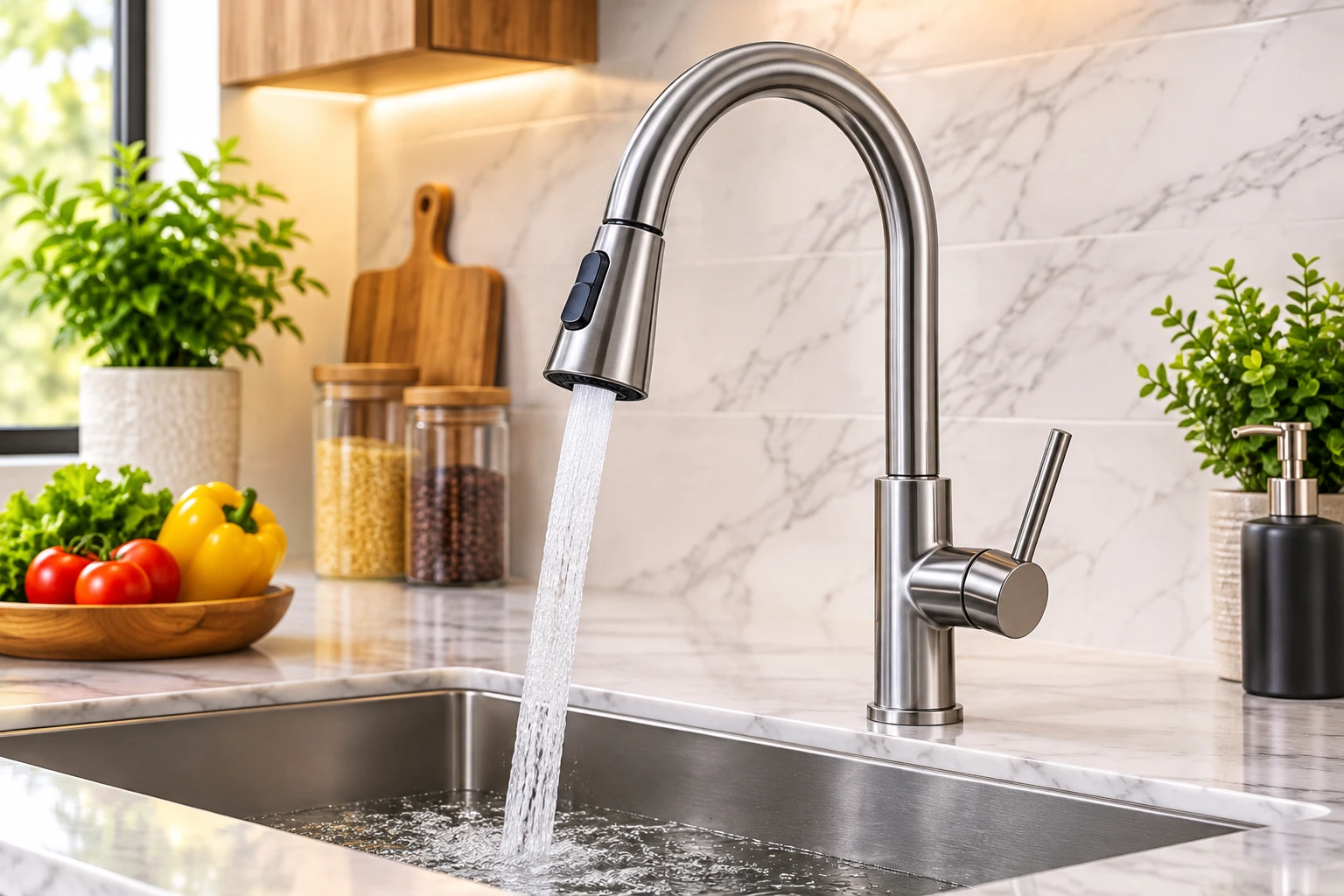
Pull-down kitchen faucets are among the most popular options in modern kitchens. They feature a spray head that pulls downward from the faucet neck, allowing users to direct water exactly where it is needed.
These faucets are particularly useful for washing large pots, rinsing vegetables, cleaning sink corners, and handling oversized cookware.
Most pull-down models include multiple spray settings, such as a steady stream and a powerful spray. Some designs also feature magnetic docking systems that help return the spray head to its original position.
Main Benefits:
- Flexible spray head for convenient cleaning.
- Easy access to different areas of the sink.
- Suitable for deep and large kitchen sinks.
- Modern appearance.
- Multiple water spray options on many models.
2. Pull-Out Kitchen Faucets
Pull-out kitchen faucets are similar to pull-down models, but their spray heads generally extend outward toward the user rather than downward.
Their compact design makes them suitable for smaller kitchens where space is limited. They provide additional flexibility when washing dishes, filling containers, and cleaning different areas around the sink.
Pull-out faucets are also useful when you need to fill a pot placed on the kitchen countertop instead of directly inside the sink.
Main Benefits:
- Flexible spray head.
- Convenient operation.
- Suitable for compact kitchens.
- Easy cleaning and rinsing.
- Practical for everyday household tasks.
3. Single-Handle Kitchen Faucets
Single-handle kitchen faucets use one lever to control both water temperature and flow. Moving the handle in different directions allows users to adjust the temperature, while lifting or lowering it controls water pressure.
These faucets are widely used because they offer simple operation and require less space than traditional two-handle designs.
They are particularly suitable for busy kitchens where quick and convenient water control is important.
Main Benefits:
- Easy temperature adjustment.
- Simple installation in compatible sinks.
- Space-saving design.
- Convenient one-handed operation.
- Available in various modern styles.
4. Double-Handle Kitchen Faucets
Double-handle kitchen faucets feature separate controls for hot and cold water. One handle controls hot water, while the other manages cold water.
This traditional design provides more independent temperature adjustment and is available in both classic and contemporary styles.
Double-handle faucets can be an excellent option for homeowners who prefer traditional kitchen designs or want their fixtures to match vintage-inspired interiors.
Main Benefits:
- Separate hot and cold water controls.
- Traditional appearance.
- Precise manual temperature adjustment.
- Available in different decorative finishes.
5. Touchless Kitchen Faucets
Touchless kitchen faucets use motion sensors to activate water flow without requiring physical contact with the handle.
Users can simply move their hands or an object near the sensor to turn the water on or off, depending on the model.
These faucets are particularly convenient when preparing food or handling dirty dishes because they reduce the need to touch the faucet with messy hands.
However, touchless models typically require batteries or an electrical connection, depending on their design.
Main Benefits:
- Convenient hands-free operation.
- Helps reduce contact with faucet handles.
- Useful during food preparation.
- Modern appearance.
- Some models offer automatic water shutoff.
6. Commercial-Style Kitchen Faucets
Commercial-style kitchen faucets are inspired by the fixtures commonly found in professional restaurant kitchens. They often feature tall structures, flexible hoses, exposed springs, and powerful spray heads.
These faucets are designed for demanding cleaning tasks and are especially suitable for large kitchens with deep sinks.
Although they can provide excellent functionality, their larger dimensions may not work well in smaller kitchen spaces.
Main Benefits:
- Professional appearance.
- Flexible spray functionality.
- Convenient for large cookware.
- Suitable for spacious kitchens.
- Often designed for frequent use.
7. Wall-Mounted Kitchen Faucets
Wall-mounted kitchen faucets are installed directly onto the wall above the sink instead of being attached to the countertop or sink surface.
This design creates additional space around the sink and can make cleaning the countertop easier.
However, installation usually requires properly positioned water supply connections inside the wall. For this reason, wall-mounted faucets are often easier to install during kitchen construction or renovation.
Main Benefits:
- Saves countertop space.
- Creates a clean and minimalist appearance.
- Easier countertop cleaning.
- Suitable for traditional and modern kitchen designs.
Important Features to Consider When Buying Kitchen Faucets
Not every kitchen faucet offers the same performance or functionality. Before purchasing one, it is important to evaluate several features to ensure that the product meets your daily requirements.
Water Flow and Spray Settings
Water flow determines how quickly water comes out of the faucet. Many modern kitchen faucets offer different spray settings for various activities.
For example, a regular stream is useful for filling containers, while a spray setting can make rinsing dishes and cleaning vegetables easier.
Choose a model that provides practical spray options without unnecessary complexity.
Faucet Height and Reach
The height and reach of a faucet determine how comfortably you can use your kitchen sink.
A high-arc faucet provides additional vertical clearance for washing large pots and filling tall containers. However, it may not be suitable for every kitchen, particularly where overhead cabinets are installed.
Before purchasing a faucet, measure your sink area and consider the available clearance.
Handle Design
Kitchen faucets are available with single-handle, double-handle, and touch-operated controls.
Your choice should depend on convenience, accessibility, and personal preference. Single-handle designs are generally easier to operate quickly, while double-handle models offer separate hot and cold water controls.
Water Efficiency
Water efficiency is another important consideration when selecting kitchen faucets.
Some models include aerators and flow-control mechanisms that help reduce water consumption while maintaining practical water pressure.
If reducing household water usage is a priority, look for products with clearly stated flow-rate specifications and applicable water-efficiency certifications.
Installation Compatibility
Before buying a faucet, check whether it is compatible with your existing kitchen sink.
Some faucets require one mounting hole, while others may need multiple holes for handles or accessories. You should also consider the countertop thickness, water supply connections, and available installation space.
Checking compatibility beforehand can prevent unnecessary installation costs.
Popular Materials Used in Kitchen Faucets
The material used in a kitchen faucet affects its durability, appearance, maintenance requirements, and resistance to corrosion.
Here are some commonly used materials.
Stainless Steel
Stainless steel is a popular material for kitchen faucets because of its durability and resistance to corrosion.
It provides a clean, modern appearance and works well with many kitchen appliances and sink designs.
Stainless steel finishes are also relatively easy to maintain with regular cleaning.
Brass
Brass is commonly used in faucet construction because it offers strength and good corrosion resistance.
Many high-quality faucets use brass internal components or brass bodies to provide reliable performance over time.
Brass faucets are available in different finishes, making them suitable for traditional and contemporary kitchens.
Zinc Alloy
Zinc alloy is another material used in kitchen faucet manufacturing.
It can provide an affordable alternative to some other metal constructions. However, product quality and coating durability can vary depending on the manufacturer.
Always check the material specifications instead of choosing a faucet based only on its appearance.
Plastic Components
Some faucets include plastic components, particularly in spray heads, internal fittings, or decorative parts.
Plastic can help reduce manufacturing costs and weight. However, the quality of these components should be evaluated carefully, especially in frequently used fixtures.
Popular Kitchen Faucet Finishes
The finish of a kitchen faucet plays an important role in the overall appearance of your kitchen.
Different finishes can complement different cabinet colors, countertops, and kitchen styles.
Chrome Finish
Chrome is a classic faucet finish known for its bright, reflective appearance.
It works well in modern and traditional kitchens and is generally easy to clean. However, water spots and fingerprints may be visible between cleanings.
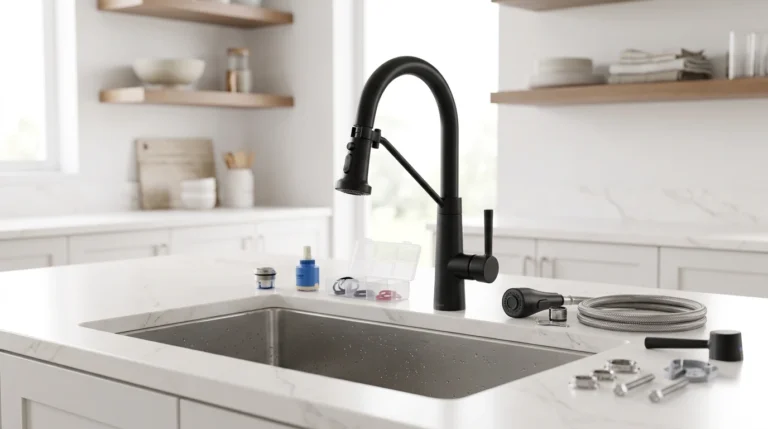
Matte Black Finish
Matte black kitchen faucets have become popular in contemporary interior design.
Their dark appearance creates a striking contrast against white countertops, light-colored cabinets, and neutral kitchen interiors.
Matte black finishes can provide an elegant look, although cleaning instructions should be followed to protect the coating.
Brushed Nickel Finish
Brushed nickel offers a soft metallic appearance that works well in many kitchen designs.
Compared with highly reflective finishes, its slightly textured appearance can make fingerprints and minor water marks less noticeable.
Brushed Gold Finish
Brushed gold faucets provide a warm and decorative appearance.
They are often used in premium kitchen interiors where homeowners want a distinctive design element.
When selecting a gold finish, check the manufacturer’s coating specifications and cleaning recommendations.
Benefits of Installing Modern Kitchen Faucets
Upgrading an old kitchen faucet can improve both the functionality and appearance of your kitchen.
Here are some important benefits of modern kitchen faucets.
Improved Daily Convenience
Modern faucets offer practical features that make everyday kitchen activities easier. Pull-down spray heads, flexible hoses, and single-handle controls can simplify washing and cleaning.
Better Kitchen Appearance
A well-designed faucet can complement your kitchen cabinets, countertops, sink, and appliances.
Choosing a suitable finish and style can help create a more coordinated interior.
More Efficient Cleaning
Flexible spray heads and adjustable water settings allow users to clean different areas of the sink more effectively.
This is particularly useful when washing large cookware or removing food residue.
Potential Water Savings
Certain kitchen faucets include water-saving aerators and flow-control technology.
These features can help reduce unnecessary water consumption, although actual savings depend on the faucet’s flow rate and how it is used.
Enhanced Hygiene
Touchless kitchen faucets allow users to activate water without touching the handle.
This feature can be especially helpful when handling raw ingredients, dirty dishes, or cleaning products.
How to Choose the Best Kitchen Faucet for Your Home
With so many available options, selecting the right kitchen faucet can feel overwhelming. The best approach is to focus on your kitchen layout, daily requirements, budget, and preferred design.
Consider these factors before making a purchase.
1. Understand Your Kitchen Requirements
Start by identifying how you normally use your kitchen sink.
If you frequently wash large pots and pans, a pull-down faucet with a high-arc design may be suitable.
For smaller kitchens, a compact pull-out faucet may provide better functionality without taking up too much space.
2. Check Your Sink Configuration
Measure your sink and inspect the existing faucet mounting holes.
Determine whether your sink supports a single-hole installation or requires a multi-hole faucet.
Also, check the available space between the sink and overhead cabinets.
3. Choose a Durable Material
Look for faucets made with quality materials and reliable internal components.
Stainless steel and brass are commonly preferred options for durability. However, product construction, manufacturing quality, and warranty coverage are equally important.
4. Compare Features
Compare the features of different kitchen faucets before deciding.
Consider whether you actually need touchless activation, multiple spray settings, a flexible hose, or a magnetic docking system.
Choosing practical features can provide better long-term value than paying for unnecessary extras.
5. Consider Your Budget
Kitchen faucets are available at different price points.
Instead of selecting the cheapest option, compare construction quality, warranty, replacement-part availability, and manufacturer reputation.
A dependable faucet that meets your requirements can be a better investment over time.
6. Read Product Reviews
Customer reviews can help you understand how a faucet performs after installation.
Pay attention to feedback about water pressure, leakage, handle operation, finish durability, and customer support.
Try to review multiple sources rather than relying on a single opinion.
Kitchen Faucet Installation: What You Should Know
Proper installation is essential for ensuring reliable faucet performance.
Although some homeowners can install basic kitchen faucets themselves, complicated installations may require professional plumbing assistance.
Before beginning the installation, turn off the hot and cold water supply valves. Remove the existing faucet if necessary and clean the mounting surface.
Next, position the new faucet according to the manufacturer’s instructions. Connect the water supply lines securely and make sure that all required seals and washers are correctly installed.
After installation, slowly turn on the water supply and inspect the connections for leaks.
Run the water for a short period to check the flow and remove any installation debris.
For wall-mounted faucets, complex plumbing modifications, or installations involving electrical connections, professional assistance is recommended.
Always follow the product manufacturer’s installation instructions.
Kitchen Faucet Maintenance Tips
Regular maintenance can help extend the life of your kitchen faucet and keep it functioning properly.
Follow these simple maintenance practices.
Clean the Faucet Regularly: Use a soft cloth and a mild cleaning solution to remove dirt, grease, and water spots. Avoid abrasive cleaning products that may damage the finish.
Clean the Aerator: Mineral deposits can accumulate inside the faucet aerator and reduce water flow. Remove and clean it according to the manufacturer’s instructions.
Check for Leaks: Inspect the faucet base, handle, spray head, and water connections regularly. Address small leaks before they become larger problems.
Avoid Excessive Force: Operate the handles and spray head gently. Excessive force can damage internal components.
Follow Manufacturer Guidelines: Different faucet finishes require different cleaning methods. Always follow the recommended maintenance instructions.
Common Kitchen Faucet Problems and Their Solutions
Even high-quality kitchen faucets may develop problems over time. Understanding common issues can help homeowners identify when maintenance or repairs are needed.
Low Water Pressure
Low water pressure may result from a blocked aerator, mineral deposits, partially closed supply valves, or problems with the household plumbing system.
Cleaning the aerator and checking the water supply valves may resolve simple cases.
Leaking Faucet
A leaking faucet may be caused by worn seals, damaged cartridges, loose connections, or deteriorated internal components.
Identifying the source of the leak is important before replacing any parts.
Loose Faucet Handle
A loose handle may result from a loosened mounting screw or worn internal components.
Depending on the faucet design, tightening the appropriate screw or replacing a damaged component may solve the issue.
Spray Head Problems
Pull-down and pull-out faucets may experience problems with their spray heads, hoses, or docking mechanisms.
Check the hose for obstructions and inspect the spray head for mineral buildup. Use manufacturer-approved replacement parts when necessary.
Common Mistakes to Avoid When Buying Kitchen Faucets
Choosing a kitchen faucet based only on appearance can lead to problems later.
Avoid these common purchasing mistakes:
- Ignoring the number of mounting holes in your sink.
- Buying a faucet that is too tall for available cabinet clearance.
- Choosing low-quality materials to save money.
- Overlooking the warranty and replacement-part availability.
- Ignoring the faucet’s water flow specifications.
- Selecting complicated features that you do not actually need.
- Failing to check the manufacturer’s installation requirements.
Taking time to compare different products can help you avoid unnecessary expenses and installation difficulties.
Frequently Asked Questions About Kitchen Faucets
1. Which type of kitchen faucet is best?
The best kitchen faucet depends on your needs and kitchen layout. Pull-down faucets are popular for their flexibility, single-handle faucets offer convenient operation, and touchless faucets provide hands-free functionality.
2. Are pull-down kitchen faucets better than pull-out faucets?
Both options offer flexibility. Pull-down faucets are generally suitable for deeper sinks and larger cookware, while pull-out faucets can be useful in compact kitchen spaces.
3. What is the most durable material for kitchen faucets?
Stainless steel and brass are commonly used for durable kitchen faucets. However, overall product quality, internal construction, and manufacturing standards also affect durability.
4. Are touchless kitchen faucets worth buying?
Touchless faucets can be worthwhile for households that value hands-free operation and convenience during food preparation. However, they may require batteries or electrical power and can cost more than basic models.
5. How long do kitchen faucets last?
The lifespan of a kitchen faucet depends on its construction quality, frequency of use, water conditions, and maintenance. Regular inspection and timely replacement of worn components can help extend its useful life.
6. How do I clean a kitchen faucet?
Use a soft cloth and a mild cleaning solution. Avoid harsh chemicals and abrasive materials, particularly on specialty finishes such as matte black and brushed gold.
7. Can I install a kitchen faucet myself?
Basic faucet replacements may be suitable for homeowners with plumbing experience and compatible connections. More complicated installations may require a professional plumber.
8. What should I consider before replacing an old kitchen faucet?
Check the mounting-hole configuration, sink dimensions, water supply connections, faucet height, and available installation space before purchasing a replacement.
Final Thoughts
Kitchen faucets are essential fixtures that influence the functionality, convenience, and appearance of your kitchen. With so many available styles, materials, finishes, and advanced features, choosing the right option requires careful consideration.
Whether you prefer a traditional double-handle design, a flexible pull-down faucet, a compact pull-out model, or a modern touchless fixture, the most important thing is to select a product that suits your kitchen requirements.
Focus on durability, installation compatibility, water efficiency, practical features, and ease of maintenance when comparing different options.
A well-chosen kitchen faucet can make everyday tasks more convenient while adding a stylish finishing touch to your kitchen. Take time to research available products, compare specifications, and review manufacturer information before making your final decision.